Committed to the development of green steel industry
HONEST COOPERATION
INNOVATIVE DEVELOPMENT
Adhering to the business philosophy of honest cooperation and innovative development, our company is committed to becoming a large-scale steel Co., Ltd. in the world where steel production and trade cooperation go hand in hand.

01
years
129
On-the-job staff
021
Cooperating nation
- Comprehensive Analysis of Aluminum Tube Price Trends29/07/2025
- Forecast of China's Steel Demand in 202509/07/2025
- Analysis of Import and Export Customs Data Reports of Stainless Steel13/06/2025
- Summary of aluminum ingot price trend chart from January to May23/05/2025
- The market price trend of stainless steel seamless pipes in 202515/07/2025
- Recent price trend and market analysis of Q235 hot-rolled steel strip16/07/2025
- Steel production: controlled rolling technology and controlled cooling technology23/05/2025
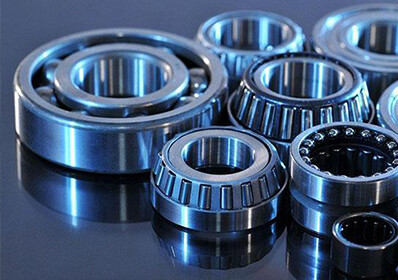
 27/06/2025Bearing steel production technology (The most stringent requirements in alloy steel)
Bearings have higher requirements for their materials, and must have high hardness, resistance, contact fatigue strength, elastic limit, good impact toughness, fracture toughness, dimensional stability, rust resistance and cold and hot processing
Equal performance. In order to ensure these performance requirements, the gold quality of bearing steel must ensure its strict chemical composition and chemical composition uniformity, especially high purity, very low oxygen content and residual element content, strict low-power structure and high-power structure, strict carbide uniformity, strict surface decarburization layer and internal porosity, segregation, microscopic pores, etc. Surface and internal defects such as cracks, slag inclusion, burrs, folds, scarring, oxidation, shrinkage, bubbles, white spots and overburning are not allowed.
At present, there are five main categories of bearing steel used in the world, namely, high-carbon chromium bearing steel, carburized bearing steel, stainless bearing steel, high-temperature bearing steel, and medium-carbon bearing steel.
1) High carbon chromium bearing steel. High-carbon chromium bearing steel is a high-carbon alloy steel containing 0.6%~1.5% chromium. At present, five grades are used in the Chinese standard, GCr15, GCr6, GCr9, GCr9SiMn, Gcr15SiMn. High-carbon chromium bearing steel can basically meet the bearing requirements of general working conditions, has good wear resistance and contact fatigue resistance, has ideal corrosion resistance and a certain degree of elasticity, toughness, processing performance is better, the price is also cheaper, so the most widely used. Due to the difference in hardenability, the largest amount of GCr15 and GCr15SiMn, GCr6 and GCr9 have been rarely used.
2) Carburized bearing steel. Carburized bearing steel is in essence a high-quality carburized structural steel, the current Chinese standard uses 6 grades G20CrMo, G20CrNiM0, G20Cr2Ni4, G20CrNi2Mo, G10CrNi3Mo, G20Cr2Mn2Mo. This kind of steel after carburizing, quenching, tempering and other heat treatment processes, the surface has a high hardness and certain wear resistance and high contact fatigue strength, and its heart has good toughness, a certain strength and hardness. It is mainly used for bearing and oversized bearing under impact load, such as railway and rolling mill bearings.
3) Stainless bearing steel. There are martensitic stainless steel and austenitic stainless steel, the current Chinese standard uses 3 grades,9Cr18, 9Cr18Mo, Cr14Mo4. Among them, martensitic stainless steel 9Cr18 is the most used. This kind of steel can get all or most of the martensitic structure after heat treatment, with high strength, good wear resistance and toughness, especially in seawater, acid, organic brine solution has strong corrosion resistance. The disadvantage of these bearing steels is that the carbon content is high, and the carbon and chromium form coarse primary carbides, which reduces the mechanical properties of the material and reduces the contribution of the chromium element against corrosion. Austenitic stainless steel such as 1Cr18Ni9Ti can obtain a single austenitic structure after heat treatment, which has good toughness and good corrosion resistance. However, because the strength and hardness are not high, it is only suitable for manufacturing low-load and low-speed bearings.
4) High temperature bearing steel. High temperature bearing steel has certain high temperature hardness and high temperature wear resistance. High temperature contact fatigue strength, oxidation resistance, impact resistance, high temperature dimensional stability, etc. This type of steel uses some steel grades of high speed steel and high chromium martensitic stainless steel. China's current use of high temperature bearing steel are mainly :9Cr18Mo(260℃), Cr4M04V(315℃), Cr14Mo4(480C), W6M5Cr4V2(480C), W18Cr4V(560C), W12Cr4V5Co5(590℃) The most commonly used is Cr4M4V. The tempering temperature of high-carbon chromium bearing steel is 160~180 ° C, so the use temperature generally does not exceed 120 ° C, if the use temperature exceeds 120 ° C, the strength of the steel drops sharply, the size is unstable and leads to the fatigue strength of the bearing is reduced. Therefore, can only use high temperature bearing steel and can not use high carbon chromium bearing steel, such as aircraft turbojet engine power is increasing, compressor and turbine main shaft bearing requirements of high temperature, the working temperature is generally 55~260 ° C, the highest can reach 370 ° C, in this working condition, can only use high temperature bearing steel.
5) Medium carbon bearing steel. Medium carbon bearing steel is medium carbon alloy steel, China is currently mainly :55, 50MnA, 70Mn, 5CrMnMlo, 60CrMnMOA, 55SiMOVA, 50SiM, the last two steel numbers are the impact bearing steel developed in China. This type of steel is suitable for making oversized bearings for heavy equipment such as driving, lifting, and large machine tools. The general speed is not high, but it bears large axial and radial loads and bending stresses.
- 27/06/2025Summary of aluminum ingot price trend chart from January to May

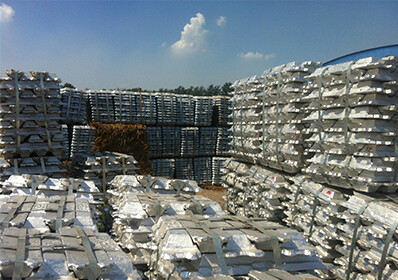
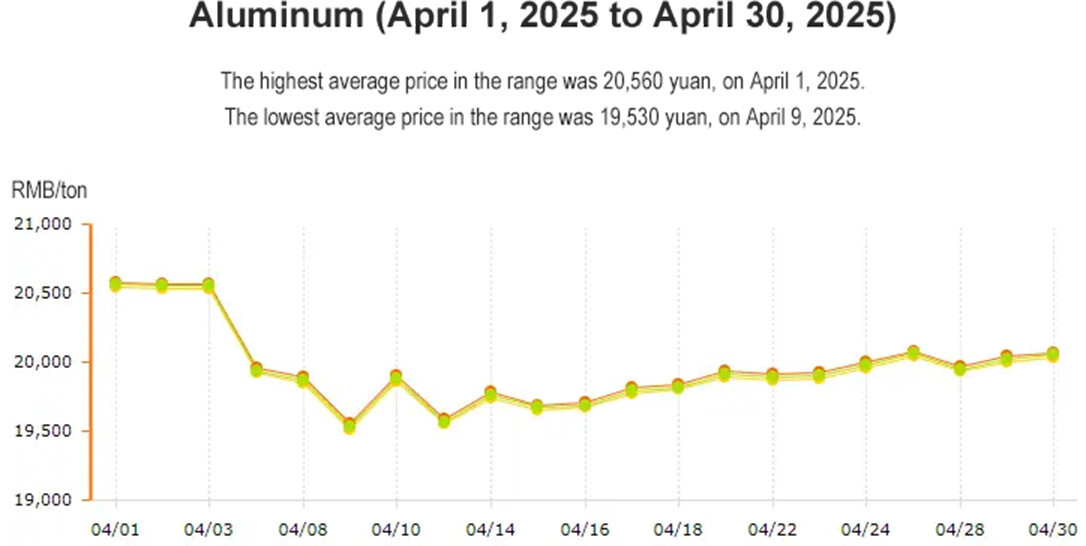
As of April 28, the inventory of electrolytic aluminum in China's major markets was 649,000 tons, a decrease of 15,000 tons from last week and 27,000 tons from last Monday. From a fundamental perspective, the peak consumption season in the first half of the year is at its end, and the operating rate of downstream processing industries may weaken. However, with the arrival of the May Day holiday, the willingness of downstream companies to stock up before the holiday has increased. With the continuous destocking of social warehouses, the price of aluminum has fallen below 700,000 tons, which is at a low level in the past five years. Consumption resilience and social warehouse destocking provide support for aluminum prices.
However, the traditional peak consumption season is coming to an end, and coupled with the continued uncertainty of exports, subsequent consumption may be under pressure to gradually slow down. In terms of the macro aspect, as the United States grants a 90-day exemption period to some trading partners, market sentiment has improved to a certain extent. Coupled with the rush to install photovoltaic companies, downstream processing companies choose to replenish raw material stocks at a low price, leading to a decline in visible stocks. However, China and the United States have not yet reached an agreement on tariffs, and the future direction is still unclear. On the other hand, downstream processing companies reported that orders have declined month-on-month. In addition to the pre-holiday just-needed stocking, the willingness to withdraw funds and hold currency to wait and see is stronger. On the whole, aluminum ingots continue to destock, and there is little overall change on the supply side. In addition, important domestic meetings have also given the market certain favorable policy expectations. The overall macro environment continues to give aluminum prices room for recovery. It is expected that Shanghai Aluminum will test the stability of the 20,000 mark. It is recommended to clear inventory during the holidays.
 15/07/2025The market price trend of stainless steel seamless pipes in 2025
In 2025, the price of stainless steel seamless pipes is affected by multiple factors such as the macroeconomy, supply and demand relationship, and raw material costs. It shows a trend of "stagnation and adjustment in the first half of the year, and upward expectation in the second half of the year". The market operates under the game of strong expectations and weak reality, and the price fluctuations are mainly driven by capital sentiment, cost transmission, and regional supply and demand differences.
Price trend in the first half of 2025
In the first half of the year, the prices of seamless stainless steel pipes showed regional differentiation characteristics. Market prices fluctuated significantly due to the raw material sector and the futures market:
Wuxi Market: On March 6th, the mainstream transaction prices for 304 Φ1084 were 16,300 - 17,800 yuan/ton, and for 316L Φ1084 were 26,900 - 32,700 yuan/ton. The transaction atmosphere gradually improved as the futures prices strengthened. Large orders and sporadic deliveries coexisted.
Wenzhou Market: On March 6th, the prices slightly dropped. 304 Φ1084 fell to 15,900 - 17,000 yuan/ton (a decrease of 200 yuan/ton compared to the previous month), and 316L Φ1084 dropped to 27,000 - 30,300 yuan/ton (a decrease of 100 yuan/ton). This was mainly influenced by the price reduction of Changsheng round steel. After the price drop, the transaction volume of 304 resources increased.
Short-term fluctuations in July: Due to the price adjustment of Changsheng's 304 round steel (quoted at 14,600 yuan/ton in July), Wenzhou Lirong's 304 Φ108*4 price was adjusted to 17,500 yuan/ton, and Wuxi Xinbming's same specification quoted at 17,600 yuan/ton. The inquiry volume in the market increased along with the price adjustment.

Search for the product you want.